Redesigning the Human Element of Sustainability
“We will never escape ecological collapse if markets keep monetising human vulnerabilities.”
I work at the intersection of ecological economics, behavioral science, and sustainability transitions, focusing on consumption not as a choice, but as a systemic emotional design problem. My research challenges the status quo by asking a fundamental question: Why do we keep consuming the planet—even when we know better? Policies, nudges, and environmental messages have largely failed to reverse the trend. This suggests that the problem is not a lack of information, but a fundamental flaw in the system itself.
From Profit to Purpose
Some time ago, I stood at the peak of what many would consider a successful career. I had helped build startups valued at nearly $1 billion and raised over $70 million in capital. Yet, amidst this professional success, I was struck by an uncomfortable realization: growth without meaning is not progress—it is an accelerated decline. I found myself unable to find satisfactory answers to critical business questions, particularly regarding the escalating environmental crisis. Confronted with global instability and dissatisfied with purely profit-oriented explanations, I made a radical decision. I took an executive sabbatical to step away from the boardroom and dive directly into the data behind our environmental reality.
My initial goal was to understand where business should stand in the face of negative environmental and social externalities. I began a PhD project at a business school (UNIC, Cyprus), but I quickly realized that standard business-level analysis was insufficient. To truly understand the problem, I needed an “eagle view”—a broader economic lens before I could zoom back into specific business topics. This pursuit led me to a summer school in ecological and feminist economics (University of Barcelona). There, I was profoundly influenced by the work of Herman Daly. His vision of an economy embedded within ecological limits resonated deeply with my background in biology. It was a turning point. I didn’t just study these ideas; I immersed myself in them, eventually serving as a country contact for a European ecological economics network.
The Engineering of Demand
As I deepened my research, I encountered a persistent paradox known as the “attitude-behavior gap.” Most people know we are harming the planet, yet our consumption habits remain unchanged. Traditional research methods, like surveys, could explain how people thought, but they failed to explain why we behave unsustainably despite our best intentions. It became clear to me that the problem was not a lack of data or technology. The issue was that our economic systems have hijacked human emotional and cognitive architecture. Modern economies were not just responding to demand; they were actively engineering it.
Dopamine hits were reframed as “choice.”
Stress relief was sold as a “lifestyle.”
Status was marketed as “identity.”
Ecological collapse persists because economic systems turn consumption into a behavioral addiction that locks societies into overshoot.
Testing New Solutions in the Laboratory
To address this, I knew I needed more than just theory—I needed rigorous experimental evidence. I applied for the longest available Erasmus traineeship and secured a placement at Maastricht University in the Netherlands with access to behavioral economics. There, I began designing experiments for my PhD, focusing on the nexus between sustainable consumption and a deeper understanding of social responsibility. My goal was to turn our understanding of consumer behavior upside down—moving away from guilt-tripping policies and towards inspiring frameworks that align human health with planetary boundaries.
Parallel to my research, I felt a responsibility to translate these complex academic insights for the real world. My work translates ideas from ecological economics—planetary boundaries, natural capital, resilience, and post-growth theory—out of academia and into policy, leadership, and public discourse. I documented material in Emotional Capital for the Triple Win, which synthesizes insights from over 200 academic sources and a decade of interdisciplinary research into a single claim:
The fastest and most underused lever for climate and social progress is transforming consumption itself—not through nudges, but through systemic emotional design.
A Commitment to the Future
Research shows that up to 90% of purchases are impulsive. We also make planned purchases that serve our psychological distractions rather than our real needs. Psychological health matters, but building it through unhealthy coping strategies that damage the planet and others is hardly a solution. Consumer behavior is therefore not a peripheral concern; it is a central driver of ecological overshoot—and the most immediate point of intervention. By 2050, global stability depends on reversing ecological overshoot at more than twice the current rate. Yet the gap between scientific knowledge and real-world action continues to widen. Incremental “green economy” adjustments are insufficient. Even when evidence supports reducing material throughput, political and public support collapse. The system remains stuck, and consumption is the lock.
My research is a commitment to a cause greater than myself: reshaping how we engage with our ecological and social limits to build a future that is not just profitable, but viable, ethical, and profoundly human. If you are building policies, organizations, or systems for a post-growth world, this is the conversation we need to be having.
For Passionate Explorers
Recent Books

EMOTIONAL CAPITAL
Emotional Capital for the Triple Win: 50 Innovative Ways to Lead the Consumption Revolution. A groundbreaking guide for the next generation of business leaders, founders, and innovators, this book unveils 50 innovative strategies to revolutionize consumer behavior to achieve the triple win: for people, the planet and universal prosperity.
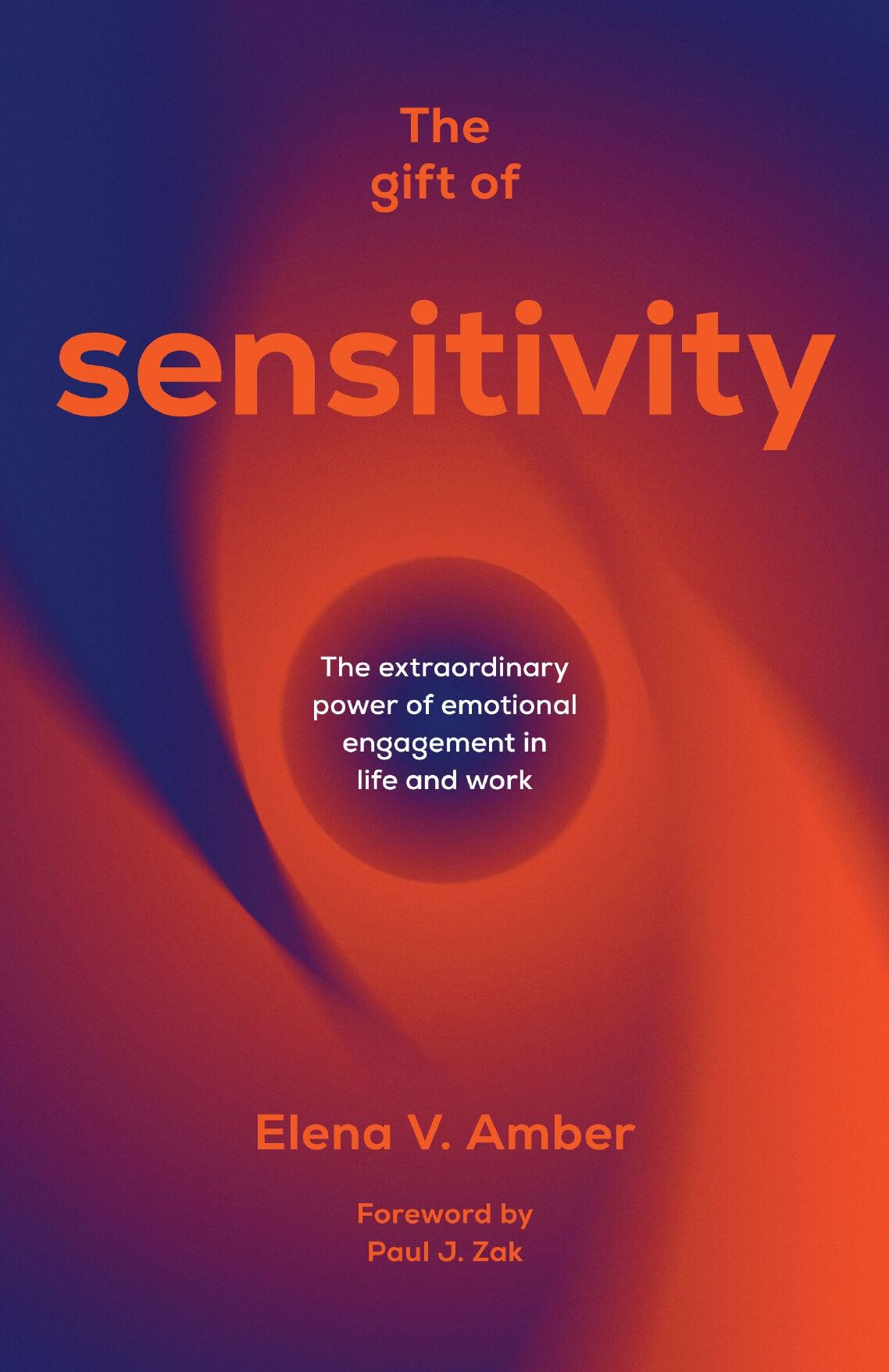
THE GIFT OF SENSITIVITY
This is the era of emotion: EQ training for employees, empathy in leadership, the Experience Economy of consumers. But how do we access the full potential of creativity, originality, innovation, intuition, flexibility, and inclusiveness that emotions can unlock? Through sensitivity. The Gift of Sensitivity: The Extraordinary Power of Emotional Engagement in Life and Work is available at all good bookshops.
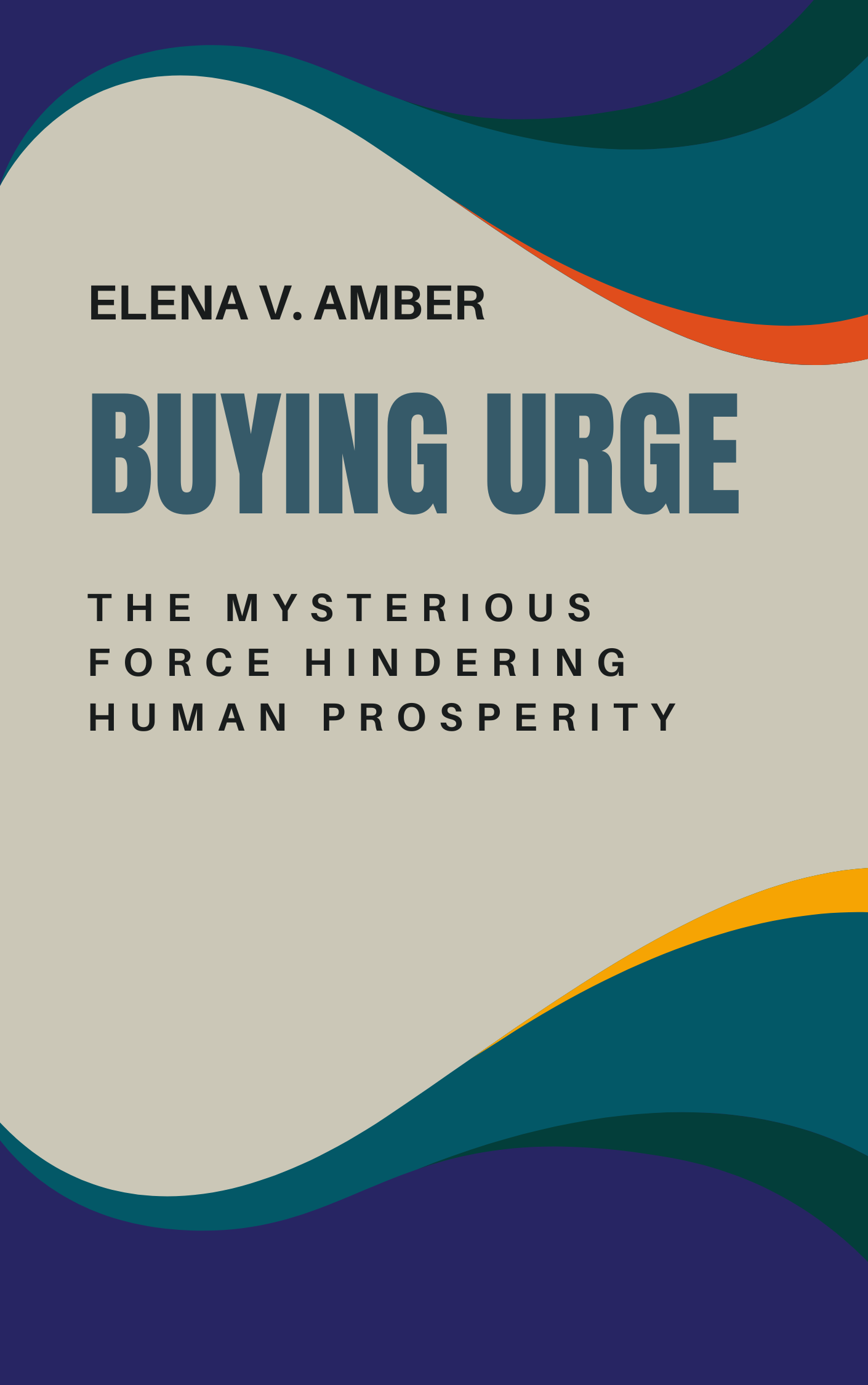
BUYING URGE
Buying Urge takes readers on a thought-provoking journey through the intricate connections between human psychology, economics, spiritual practices and global challenges.
This compelling exploration uncovers the potential to reshape our lives for the betterment of all.
Featured on